
You’ve cut carbs. You’ve started walking. You’ve done everything your doctor told you, and your blood sugar is still creeping up. Here’s the part no one has explained to you yet: stress might be doing more damage to your glucose levels than everything you’re eating combined. If you’re a high-achieving professional, a parent juggling a …

You’ve cut carbs. You’ve started walking. You’ve done everything your doctor told you, and your blood sugar is still creeping up.
Here’s the part no one has explained to you yet: stress might be doing more damage to your glucose levels than everything you’re eating combined.
If you’re a high-achieving professional, a parent juggling a thousand responsibilities, or someone who’s watched their HbA1c climb despite a “clean” diet, this is for you. The stress and blood sugar connection is one of the most under-discussed causes of prediabetes in working adults. And it’s not just about “managing stress better.” It’s about understanding how your body’s emergency system, designed to save your life, is silently sabotaging your metabolism. This article will break down the science, the signs, and the solutions. By the end, you’ll know exactly how stress raises blood sugar, why it’s happening to you, and what to do about it. The stress and blood sugar connection is often overlooked until symptoms like fatigue, cravings, and energy crashes begin affecting daily life.
Stress and Blood Sugar Connection: What Happens Inside the Body
The Cortisol Response, Your Body’s Emergency Switch
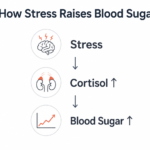
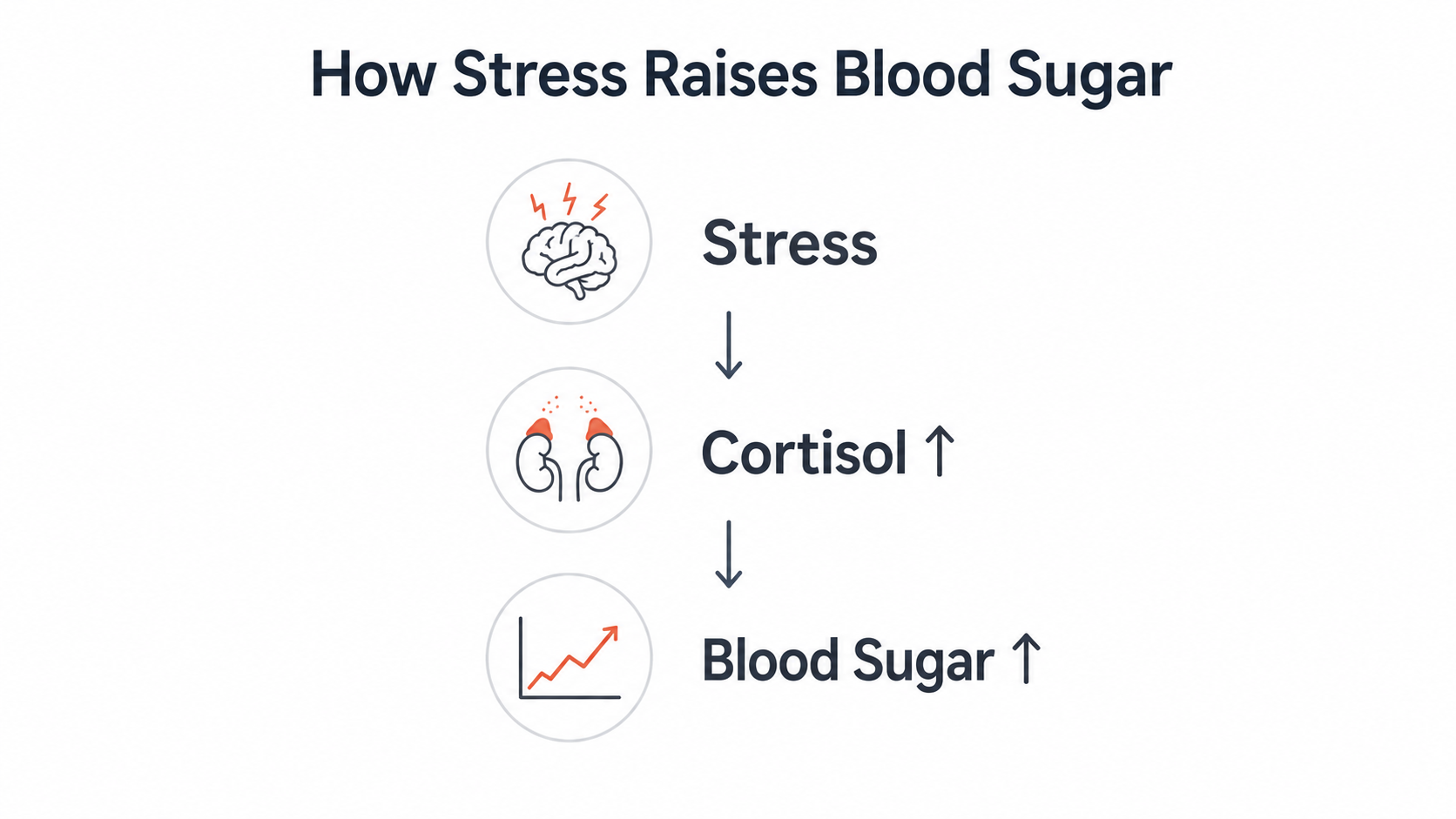
Cortisol isn’t the villain. It’s your body’s built-in alarm system. When you’re stressed, whether it’s a looming deadline, a heated argument, or even just the relentless ping of notifications, your brain signals your adrenal glands to release cortisol. This hormone’s job? To give you energy fast by unlocking stored glucose in your liver.
Here’s the catch: Your liver releases stored glucose as fuel, whether you need it or not. If you’re sitting at your desk, not running from a lion, that extra sugar has nowhere to go. And if this happens repeatedly? Your blood sugar stays elevated.
Why Chronic Work Stress Is Different From Acute Stress
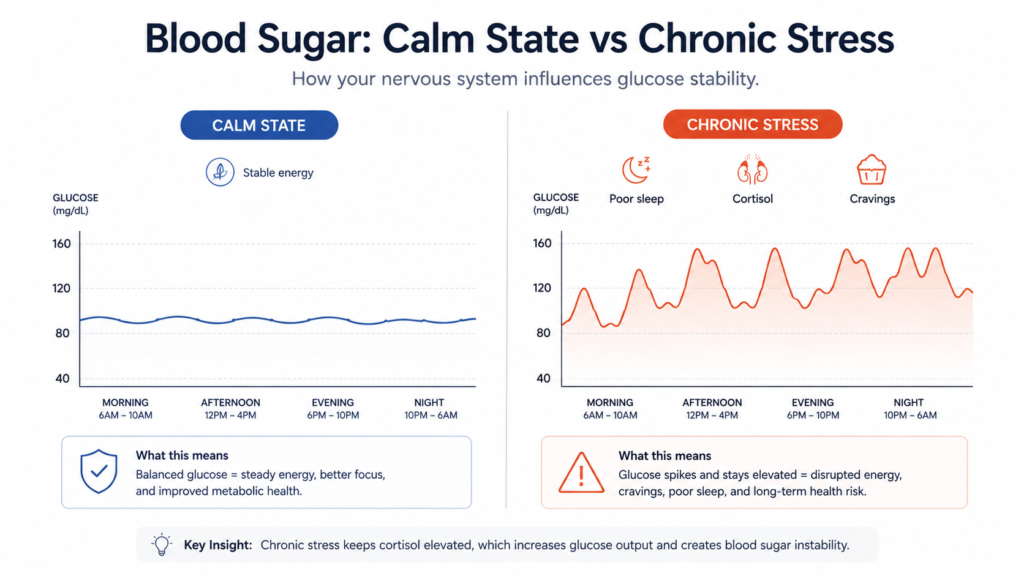
Acute stress, like a near-miss car accident or a last-minute presentation, triggers a cortisol spike that fades. But chronic stress? That’s the silent metabolic disruptor.
Deadlines, back-to-back meetings, and the pressure to always be “on”, these keep cortisol elevated all day. Studies show cortisol can remain high for 6–8 hours after a stressful event. For professionals in high-pressure roles, that means your body is constantly in a state of glucose overdrive. This isn’t the same as the temporary stress that fades after a big meeting. It never fully turns off.
The Stress–Blood Sugar Connection Explained Simply
How Cortisol Raises Blood Sugar Directly
Cortisol doesn’t just unlock stored glucose; it also reduces your muscle cells’ sensitivity to insulin. Insulin is the hormone that helps your cells absorb sugar. When cortisol is high, your muscles ignore insulin’s signals. The result? Sugar stays in your bloodstream, even when you haven’t eaten. Understanding the stress and blood sugar connection can help explain why glucose levels remain elevated even with healthy habits.
Think of it like this: It’s as if your body is stepping on the accelerator (releasing glucose) and the brake (blocking insulin) at the same time.
How Insulin Resistance Develops Over Time
Insulin resistance isn’t just a diabetes buzzword. It’s what happens when your cells stop responding to insulin efficiently. Here’s the cycle:
Stress → Cortisol → Glucose spike → Insulin spike → Insulin resistance → Higher baseline blood sugar.
This loop is invisible until it isn’t. You might not feel it, but your body is racking up metabolic debt. That’s why your HbA1c keeps climbing despite eating less sugar. It’s also why so many professionals first discover they’re prediabetic during a routine corporate health check.
The Nervous System’s Role, Fight-or-Flight and Your Pancreas
Your sympathetic nervous system, the one that kicks in during stress, suppresses insulin secretion. Why? Because in a true emergency, your body prioritises quick energy over long-term storage. But when you’re chronically stressed, your pancreas can’t keep up.
The only way to reverse this? Parasympathetic activation, the “rest and digest” state. This isn’t wellness fluff. It’s metabolic medicine. Without it, your body stays stuck in a glucose-dysregulated loop.
Signs That Stress May Be Affecting Your Blood Sugar
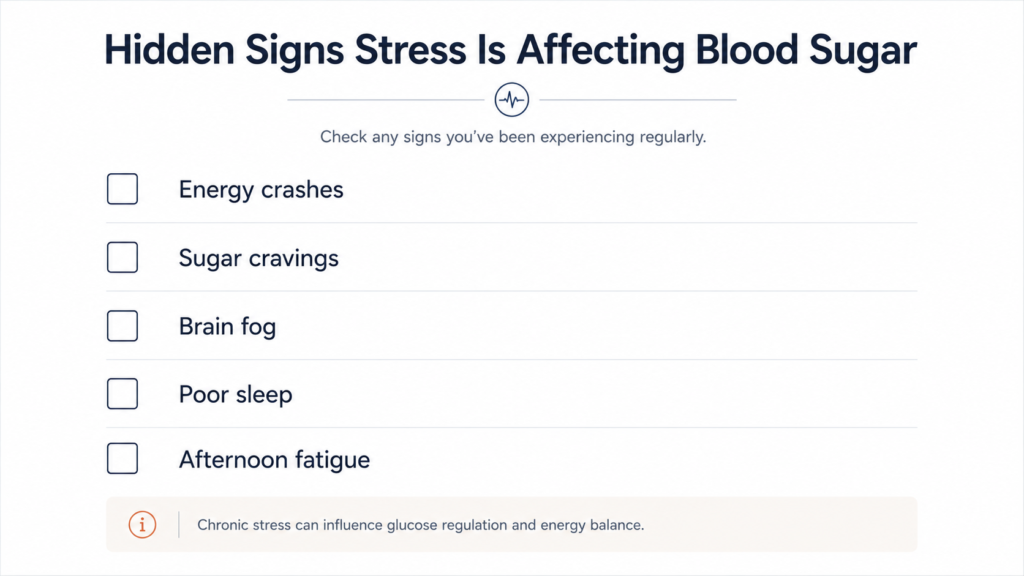
You might not connect these symptoms to stress, but they’re classic red flags:
- Morning blood sugar spikes, even when you didn’t eat late the night before.
- HbA1c rising, despite a diet that should be “healthy enough.”
- Energy crashes at 3–4 PM, the cortisol dip after a high-stress morning.
- Poor sleep → next-day glucose dysregulation , a vicious cycle.
- Craving sugar or carbs after stressful meetings, your body’s misguided attempt to recover.
- Weight gain around the abdomen, visceral fat, is a signature of chronic cortisol.
- Feeling wired but tired simultaneously, the hallmark of a nervous system stuck in overdrive.
Who Is Most at Risk? (Hint: It’s Not Who You Think)
The High-Performing Professional Pattern
You’re the one burning the candle at both ends: 50–60-hour workweeks, sleep debt, and no real recovery time. Your baseline cortisol is elevated, masked by caffeine and productivity. You think, “I eat healthy, why are my numbers going up?”
Here’s why: Your body is treating your to-do list like a life-or-death threat. And your HbA1c, especially in that 5.7–6.4 prediabetic range, is the proof.
The Caregiving Stress Pattern
This is the parent, the partner, the adult child managing everyone else’s health while depreciating their own. Postpartum? Hormonal shifts can compound the cortisol load. The pattern is the same: exhausted, can’t lose weight, numbers worsening despite the effort.
What the Research Says
The American Diabetes Association acknowledges psychosocial stress as a contributor to glucose dysregulation. The HPA axis (your brain’s stress command centre) plays a direct role in Type 2 diabetes progression. And here’s the kicker: Stress reduction interventions have been shown to improve HbA1c.
As a Certified Diabetes Educator and Integrative Health Specialist, I have worked with clients whose HbA1c improved from 5.8 to 5.4 within 3 months, without medication changes, through nervous system regulation. One client’s HbA1c moved from 6.2 to 5.7 after addressing their chronic stress-related fatigue state. Another saw their fasting glucose drop by 15 points once they aligned their lifestyle with their biology.
How to Break the Stress-Blood Sugar Cycle
Step 1: Regulate the Nervous System First (Not the Diet)
Starting with diet changes while ignoring cortisol is like putting a bandage on a bullet wound. Parasympathetic activation is the metabolic intervention you’re missing.
Practical entry points:
- Breathwork, even 2 minutes of slow, diaphragmatic breathing, can shift your nervous system.
- Body-based regulation, shaking, stretching, or walking without distractions.
- The Neural Shift Technique is a 40-minute protocol designed to move your body out of sympathetic overdrive. It’s the foundation of my approach.
Step 2: Understand Your Stress Signature
Not all stress responses look the same. Some people see morning glucose spikes (cortisol’s wake-up call). Others crash in the afternoon (the cortisol dip). Some can’t sleep. Others sleep but wake up exhausted.
Track your patterns: When do your energy and cravings peak and dip? That’s your cortisol rhythm.
Step 3: Align Your Lifestyle to Your Biology, Not Just Your Willpower
- Sleep as a metabolic intervention, not just rest. Poor sleep = higher cortisol the next day.
- Movement timing, align exercise with your cortisol rhythm (e.g., morning workouts for high morning cortisol).
- Eating patterns, support, don’t fight, your stress-elevated baseline. Skipping meals? That’s a cortisol spike waiting to happen.
Ready for a structured approach? Explore:
- [Elevora’s Prediabetes Group Program, 12-week protocol]
- [Mind hush 6-week program, stress regulation for metabolic health]
- [understanding cortisol and the stress response]
Can Stress Alone Cause Prediabetes?
Yes, if you’re genetically predisposed and under sustained stress.
Short-term stress is recoverable. Chronic stress? It creates structural metabolic change. This isn’t “just being stressed.” It’s cumulative biological debt.
So, can chronic stress cause high blood sugar? Absolutely. And why does stress cause blood sugar to rise? Because your body is stuck in survival mode, flooding your system with glucose it can’t use efficiently.
Your Blood Sugar Numbers Aren’t Just a Diet Problem
If you’ve been doing everything right and your numbers still aren’t moving, your nervous system might be the missing piece.
I help stressed professionals identify and address the cortisol-driven root cause of blood sugar dysregulation. No vague advice. No one-size-fits-all plans. Just a science-backed, nervous system-first approach to reclaiming your metabolic health.
Addressing chronic stress may improve both nervous system regulation and blood sugar balance over time.
Ready to take action?
- Check your stress score now – click here
Frequently Asked Questions
Will stress increase blood sugar even if I don’t eat anything?
Yes. Cortisol triggers your liver to release stored glucose independently of food intake. That’s why you might see high fasting blood sugar on stressful mornings.
Does stress increase sugar levels in non-diabetics?
Yes. The cortisol mechanism is universal. Sustained stress can push pre-diabetic individuals further into the diagnostic range.
How much can stress affect HbA1c?
Research suggests chronic stress can contribute to a 0.3–0.5% HbA1c elevation,enough to move you from “normal” to “prediabetic.
Can reducing stress improve blood sugar without medication?
Emerging evidence supports that HRV-based stress regulation and nervous system interventions can improve glucose metabolism. Individual results vary, but the connection is clear.
What’s the fastest way to lower cortisol-driven blood sugar?
Start with nervous system regulation,breathwork, body-based practices, or the Neural Shift Technique. Diet tweaks alone won’t cut it if cortisol is the root cause.
Why do I crave sugar when I’m stressed?
Cortisol increases blood sugar, but it also depletes serotonin and dopamine,your “feel-good” neurotransmitters. Your brain craves sugar as a quick fix to restore balance.
Can stress cause insulin resistance?
Yes. Chronic cortisol elevation reduces insulin sensitivity in muscle cells, making it harder for your body to absorb glucose. Over time, this leads to insulin resistance.